Welcome ZZJG VALVE Factory
 EN
EN RU
RU


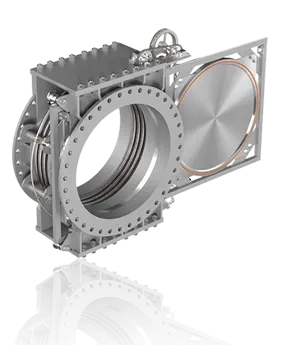
In the vast systems of industrial pipelines, there is a device known as the “gate of life”—the blind plate valve. Its emergence completely solved the century-old problem of “unbreakable and unsafe” large pipelines during maintenance.
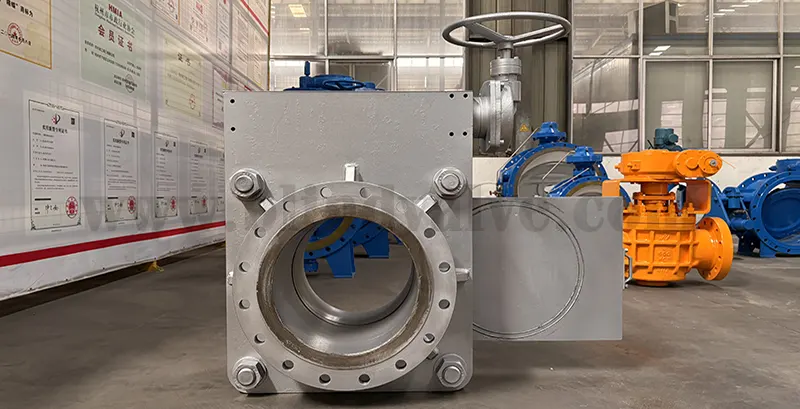
I. Primitive Era: The “Forceful” Isolation of an Iron Plate
The predecessor of the blind plate valve was actually just a simple steel plate.
In early gas pipelines or chemical production, if a section of equipment needed maintenance, workers had to shut off the upstream valve first. However, because large-diameter valves (such as gate valves) are difficult to seal 100%, residual gas could easily leak, causing poisoning or explosions.
To achieve “absolute shut-off,” workers would risk minor leaks by forcibly disassembling the flanges and inserting a round, solid steel plate (the “blind plate”) between the two flanges. After maintenance, the flanges would be disassembled again to remove the steel plate. This method was extremely dangerous and time-consuming, known as a “hardcore operation” in industrial history.
II. A Spark of Inspiration: The Birth of the “Goggle Valve” Structure
In the mid-20th century, with the explosive growth of the steel industry (especially blast furnace ironmaking), gas pipe diameters increased dramatically, rendering traditional manual steel plate insertion insufficient. Engineers drew inspiration from the opening and closing of eyeglass frames: If a solid blind plate and a perforated plate were connected together, like an eyeglass frame, and their states could be switched by lateral sliding or rotation, wouldn’t rapid opening and closing be possible? This was the initial prototype of the “Goggle Valve.”
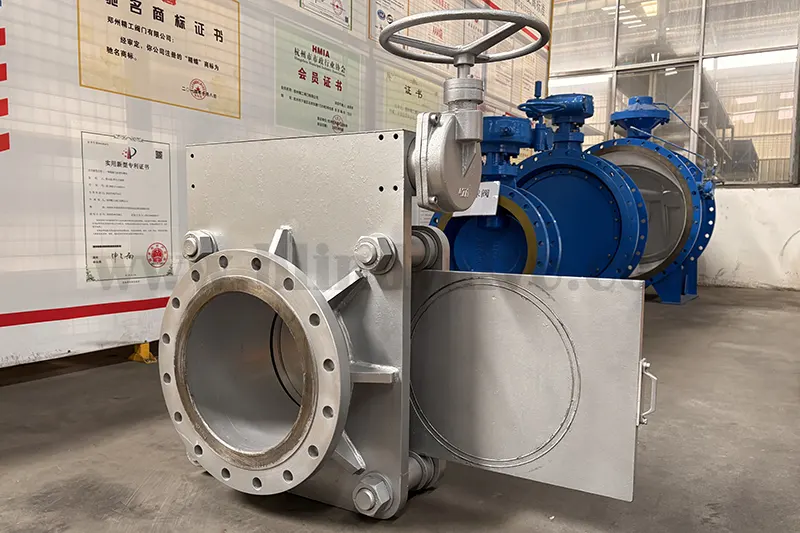
III. Technological Leap: From Manual to Fully Enclosed
Early goggle valves were open, causing significant media leakage during switching. With increasing safety and environmental protection requirements, blind valves underwent two key technological revolutions:
IV. Modern Definition: The “Stabilizing Force” of Heavy Industry
Today’s blind flange valves have undergone a complete transformation. They not only possess a massive size (diameters can reach several meters), but also integrate high-precision torque control (such as 500 N.m or even higher), hydraulic drive, and intelligent sensing.
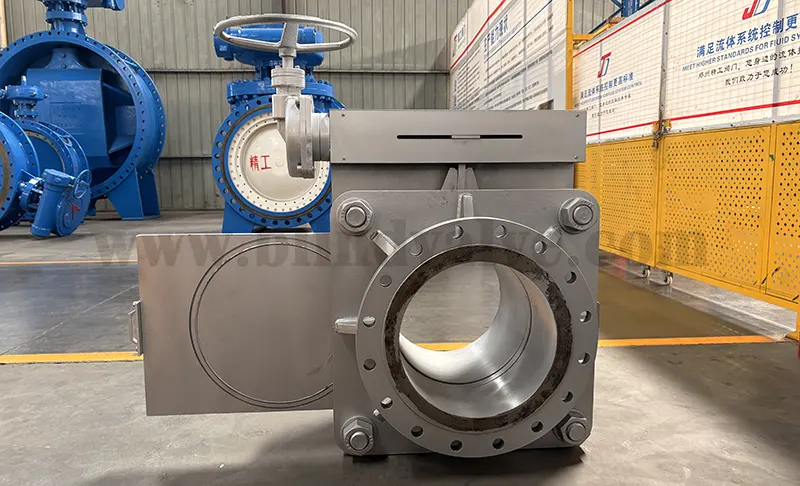
In the blast furnace gas systems of steel plants and the flammable and explosive pipelines of chemical plants, it is no longer just a valve, but a safety assurance system. When it slowly slides, aligning the solid blind flange with the pipe opening and locking it, it provides an unbreakable “firewall of life” for thousands of maintenance workers behind it.
The origin of the blind flange valve is essentially a testament to humanity’s relentless pursuit of safety and efficiency. From a simple iron plate to a sophisticated automated machine, it has witnessed every step of industrial civilization’s evolution from extensive to intensive development.
DO YOU HAVE QUESTIONS? WE ARE HERE TO HELP YOU!

Copyright © 2026 Zhengzhou Jinggong Technology Co., Ltd