Welcome ZZJG VALVE Factory
 EN
 RU



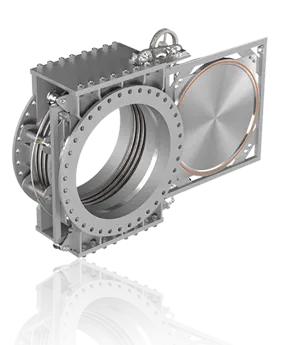
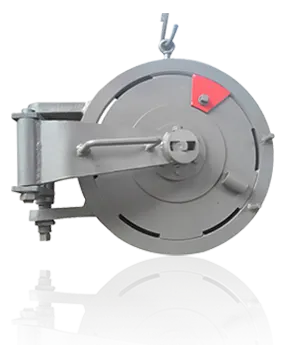
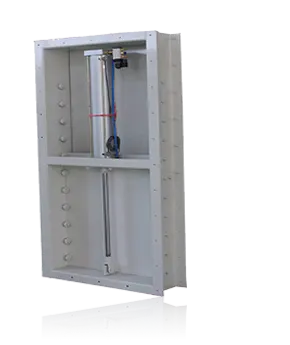
This valve uses a fully enclosed casing, which prevents the medium from leaking during operation and helps avoid environmental pollution. The valve body adopts a frame-type structure, offering good rigidity and a compact design. The sealing parts use a combination of stainless steel and rubber, ensuring reliable sealing. The clamping mechanism of the hydraulic plate valve uses spring clamping, while the electric plate valve uses a screw-nut clamping mechanism with good synchronization. The sealing ring is installed on the valve plate, making it easy to replace.
In terms of performance, the nominal pressure covers multiple grades, with a wide range of diameters. The applicable temperature does not exceed 200°C, and it can handle media such as toxic and flammable gases like coal gas.
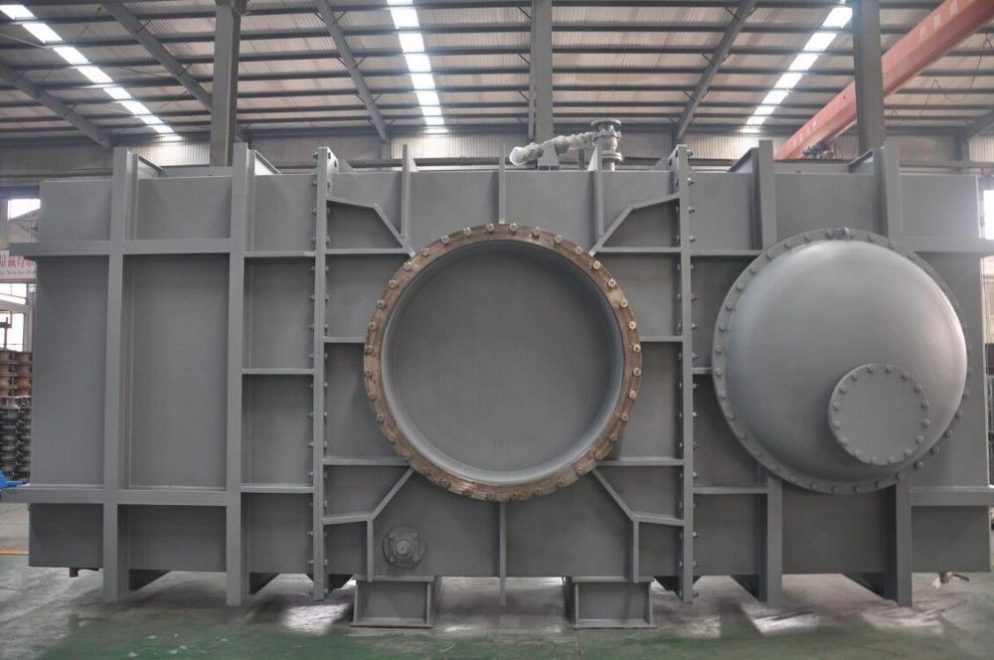
The fully enclosed blind valve mainly consists of left and right valve bodies, screw sets, flaps, sealing rings, levers, hydraulic cylinders, and other parts, forming a rigid structure with a base and support columns. The valve includes a clamping cylinder and a flap cylinder. The clamping cylinder drives the left and right valve bodies to release and clamp through the lever and screw mechanisms, while the flap cylinder controls the flap to open or close. The rubber sealing ring is embedded in the flap, offering high-temperature resistance, good sealing, easy replacement, and long service life.
This type valve prioritize sealing reliability and smooth operation in their design. The enclosed casing reduces medium leakage, and the self-locking and synchronization of the clamping mechanism contribute to stability during use. The sealing ring’s installation makes routine maintenance and replacement convenient, and the bellows structure enhances adaptability to expansion and contraction. The overall structure is compact and rigid, suitable for corresponding working conditions. During routine maintenance, it is important to check the condition of the sealing ring and the flexibility of the clamping mechanism, keep the valve body clean, and regularly inspect connections for looseness to ensure the valve operates stably within the pipeline system.
If you are interested in blind valves, we can discuss them further.
Engineer’s email: [email protected]
DO YOU HAVE QUESTIONS? WE ARE HERE TO HELP YOU!

Copyright © 2026 Zhengzhou Jinggong Technology Co., Ltd